
Running a Carbon County Sex Offender Check
The Pennsylvania State Police, or PSP, operates the authoritative Megan's Law Public Website. Begin there for a Carbon County registry search. The public data can cover a registrant's residence, intended residence, transient location, school, and workplace or general work area. Searchers may use a person's name or start with Carbon County geography. The state site is the main local channel because the research found no separate Carbon County registry database.
The registry does not list every person ever convicted of a sexual offense. Posting turns on Pennsylvania registration law, the offense, the date, and the person's current duty. Records can also lag behind a recent report. PSP warns that only fingerprint comparison establishes positive identity, so a similar name, age, or appearance should never be treated as proof.
The official Pennsylvania registry screen shows where the Carbon County check begins.
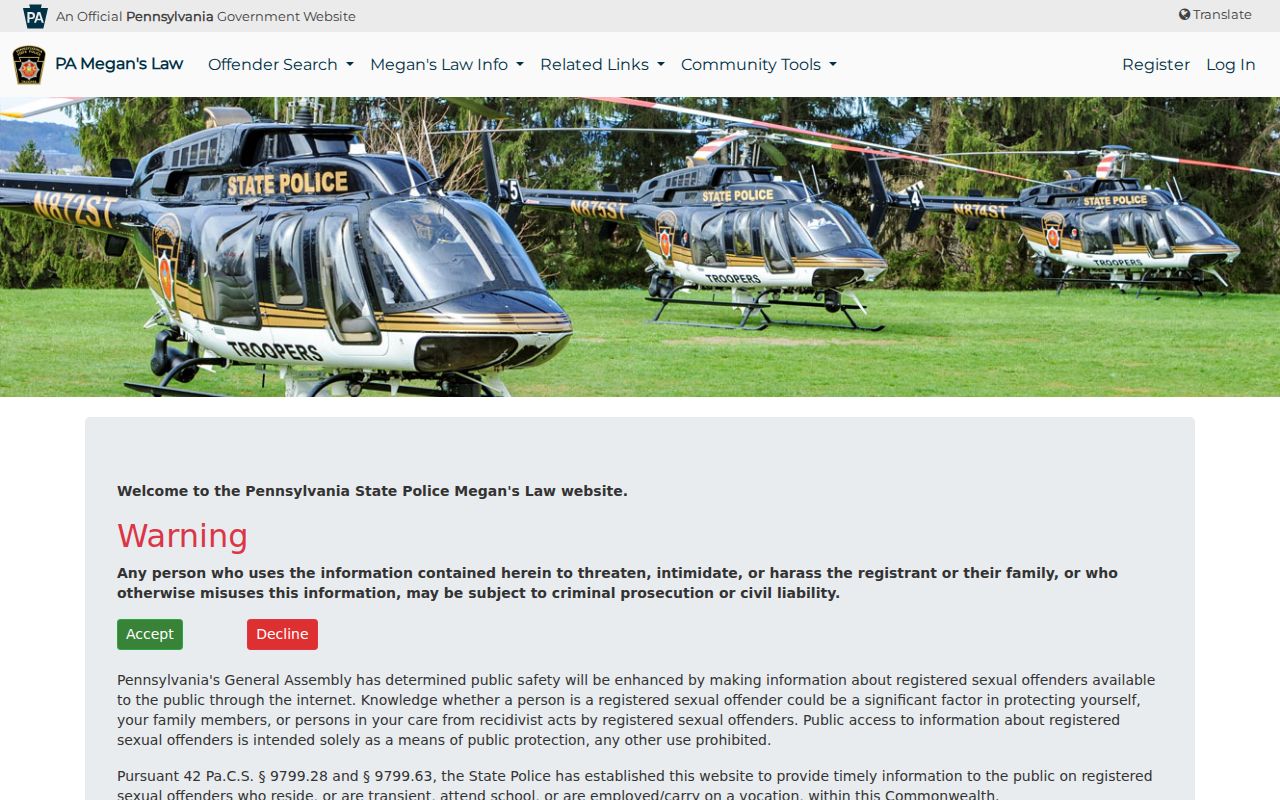
This state-run entry point keeps a Carbon County sex offender search tied to the agency that maintains the posted data.
Carbon County Registry Geography
A county filter is useful, but it is not the only geographic lens. A person may register because of a Carbon County home, a temporary or transient place, a school, or a work location. Municipality, ZIP code, street address, and radius controls can narrow the area when the live interface offers them. Map and list views then help distinguish close results from records elsewhere in the county.
Try more than one route when location is the key concern. A county-wide search can reveal records outside a single borough. A municipality or ZIP search may reduce a long result list. An address-and-radius search can focus on the blocks around a home, park, school, or route used by family members. Each method reflects posted registry geography, not a prediction of conduct.
Note: A registrant can have more than one reportable residence, work, school, or transient location, so one map pin may not tell the full story.
Searching the Pennsylvania Megan's Law Public Website
The PSP registry requires visitors to accept its public-protection and misuse warning before entering the search. Search fields change with the mode selected. Name searches work best with careful spelling and aliases, while location searches can combine Carbon County with a municipality, ZIP, or address. Use broad fields first if the exact spelling is uncertain, then narrow the results.
- Open the PSP Megan's Law Public Website and read and accept the conditions of use.
- Choose a name or geographic search, selecting Carbon County when a county filter is available.
- Compare the result list with aliases, year of birth, physical details, and locations, without assuming a name match proves identity.
- Open the full profile, check its latest-update and compliance fields, and use PSP's correction channel if information appears wrong.
| Field Label | Type | Required | Notes |
|---|---|---|---|
| Accept / Decline | Buttons | Yes | Acceptance is required to enter the search. |
| Last Name | Text | Search-dependent | Try known aliases or spelling variants with care. |
| First Name | Text | No | Narrows a name search. |
| County | Dropdown | Geographic search | Select Carbon for county results. |
| Municipality / City or ZIP | Text or select | No | Focuses the location search. |
| Address / Radius | Address and distance | No | Supports map-based proximity searching when offered. |
| Map / List View | Result control | No | Changes how geographic results are displayed. |
Carbon Registry Versus NSOPW
The PSP site is the best source for Pennsylvania detail. The U.S. Department of Justice National Sex Offender Public Website, or NSOPW, adds a multi-jurisdiction search. That layer helps when a person or location question crosses state, tribal, or territorial lines. It does not replace the Pennsylvania profile, the PSP warning, or the state correction process.
A sound sequence is simple. Search PSP for Carbon County records and full Pennsylvania details. Use NSOPW when the search reaches beyond Pennsylvania or when recent travel or a prior address makes another jurisdiction relevant. Then return to the source jurisdiction's registry to confirm its result and rules.
The official NSOPW search illustrates the national layer available after a Carbon County registry check.
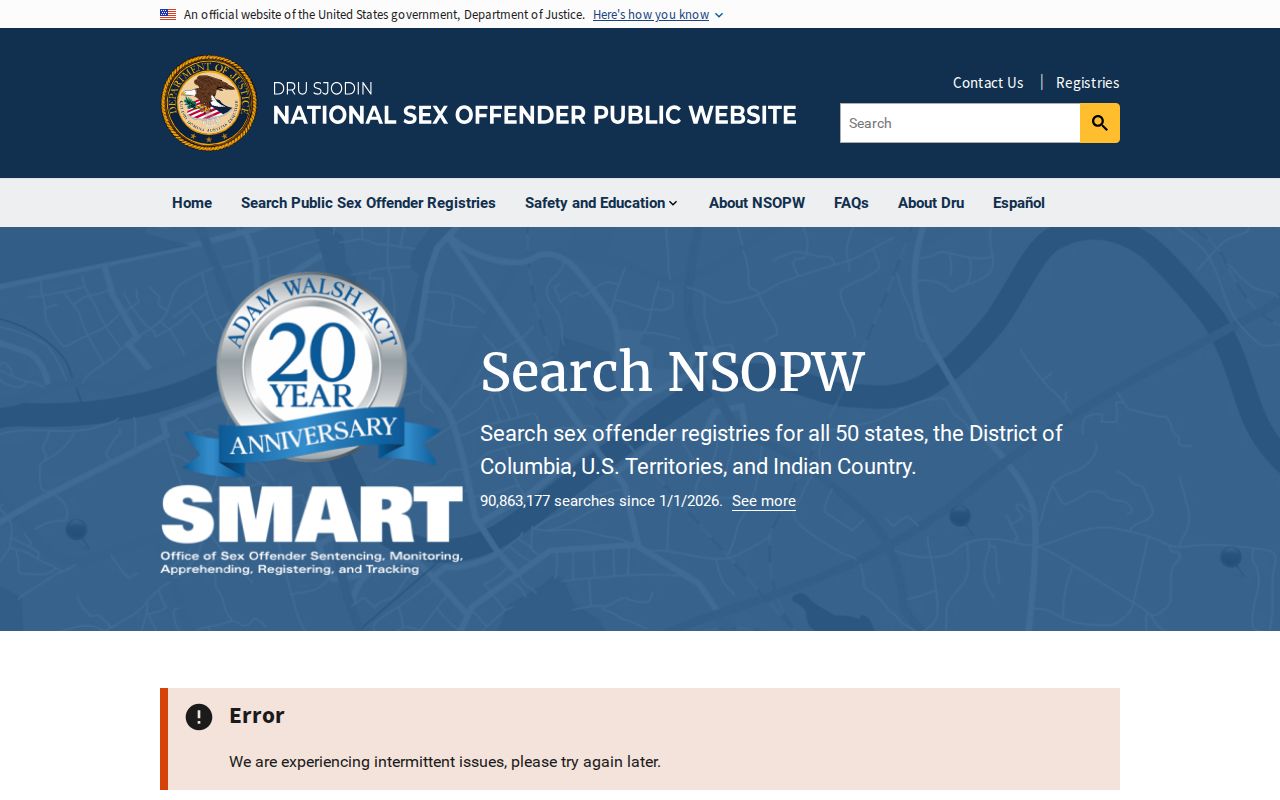
This federal search broadens geographic reach while leaving Pennsylvania profile verification with PSP.
What a Carbon Registry Profile Shows
The PSP registry FAQ identifies a wide public field set. A profile may include known aliases, year of birth, one or more reportable locations, photos, physical traits, vehicles, offenses, registration dates, and compliance information. It may show that a victim was a minor, but responsible use does not mean trying to identify a victim from the listed facts.
| Name & Aliases | Primary name and all known aliases posted by PSP. |
|---|---|
| Photo & Physical Description | Photographs plus gender, height, weight, hair, eyes, race, scars, tattoos, and other identifying marks. |
| Registered Locations | Residence or intended residence, transient places, school, and fixed or general work area as applicable. |
| Vehicle | License plate and vehicle description when part of the public profile. |
| Offense & Date | Triggering offense, other registration-triggering convictions, and conviction date when available. |
| Registration Status | Compliance indicator, registry activation, latest update, and mapped locations where available. |
The PSP profile-field explanation provides a non-identifying view of what may appear.
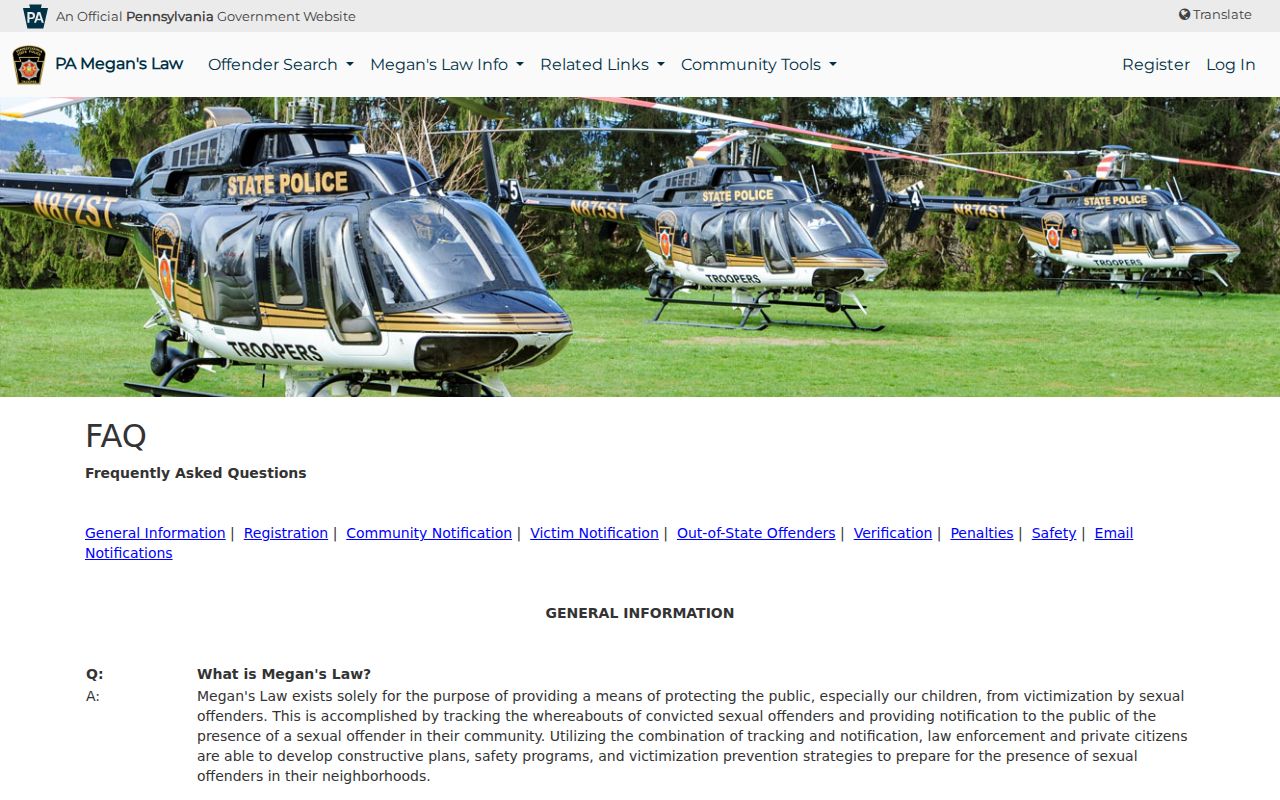
Reading the field definitions first helps keep a Carbon County registry profile in context.
Correcting Carbon Registry Information
If a Carbon County profile seems old or incorrect, record the profile and the field at issue rather than confronting the person shown. PSP lists 1-866-771-3170 as its correction line. The registry itself notes that posted facts may be outdated or inaccurate. A latest-update date can help frame the question, but it does not independently prove when a life change occurred or when PSP received it.
Identity errors need special care. Compare aliases, year of birth, physical description, vehicles, and location details. Even a close set of fields is not the same as a fingerprint match. For an emergency or a suspected crime, contact police or 911. The registry correction line serves data questions, not emergency response.
Note: Save the public profile URL and note the disputed field before calling, since clear details help PSP assess a correction request.
Registration Requirements and Levels in Pennsylvania
Pennsylvania's Sex Offender Registration and Notification Act uses tier and older-law frameworks. The controlling offense, conviction date, and statutory subchapter matter. Modern tier shorthand must not be forced onto every person whose registration began under an older framework. PSP's registration details supply the current offense lists and reporting duties.
| Classification | General Duration | Verification / Qualification |
|---|---|---|
| Tier I | 15 years | Periodic verification under SORNA; the qualifying offense controls. |
| Tier II | 25 years | More frequent verification than Tier I; offense and date control. |
| Tier III | Lifetime | Generally quarterly in-person verification. |
| Sexually Violent Predator / related | Lifetime | Enhanced notice and treatment duties follow the statutory and court process. |
| Pre-SORNA / Subchapter I | Applicable older-law duration | Offense date is crucial; modern tier labels may not fit. |
The official PSP registration page shows why the Carbon County registry must be read under the right statutory track.
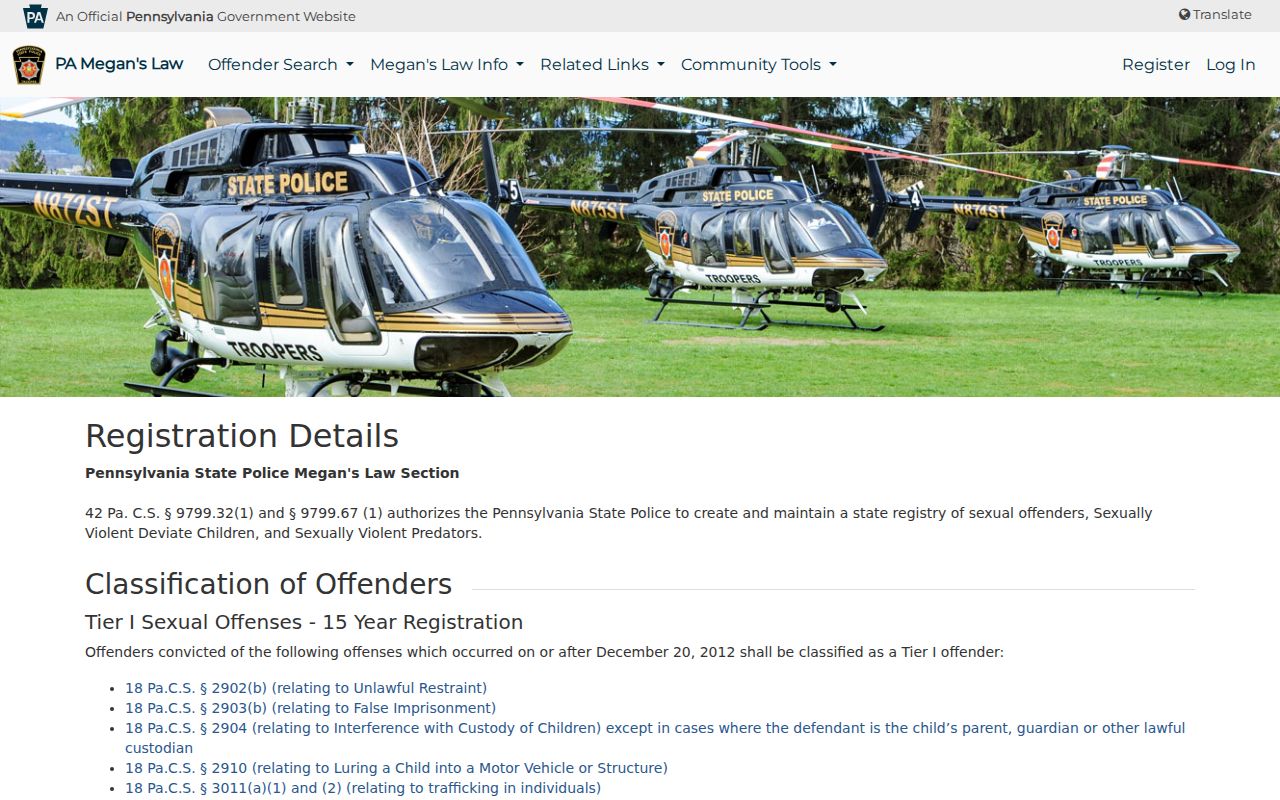
The state source gives the full legal detail that a short tier table cannot capture.
Carbon Registry Change Reports
For offenses in the post-December 20, 2012 framework, PSP states that specified changes must be reported in person at an approved verification site within three business days. Covered updates include a name or alias, residence or transient status, work, school, telephone, and other data named by law. This duty explains why profiles can contain several types of location, not just a home address.
A recent move does not justify guessing that a profile is wrong. Reporting, verification, and public posting are separate events. Use the correction line for suspected stale data. If conduct suggests an immediate offense or threat, use police channels instead.
Carbon County Buffer-Zone Myth
Pennsylvania Megan's Law does not create one universal statewide rule that bars every registrant from living within a fixed distance of a school. PSP says the registry law itself does not restrict where an offender or sexually violent predator may reside. That fact is easy to miss when a map places a marker near a school, park, or child-care site.
Individual supervision conditions can still impose limits, and a lawful local rule may address a specific setting. Those separate conditions should not be inferred from the public map. The registry reports public location facts; it does not certify that every nearby place is prohibited or allowed. Ask the agency that imposed a condition when a precise legal question must be resolved.
Note: A radius result measures proximity for awareness; it does not by itself establish a violation of Pennsylvania law.
Carbon County Registry Alerts
The PSP system includes electronic notifications as a separate feature. An email or account-based alert can add awareness when posted registry information changes near a chosen place. It is not a registry status field and cannot be treated as a complete safety plan. Delivery may lag, search settings may be narrow, and the public registry itself can contain old data.
Pair notices with common-sense steps. Review the selected area in the live registry, keep contact details current in the alert account, and use official police channels for urgent facts. A missing alert does not prove that no reportable person lives, works, studies, or reports transient status in the area.
Lawful Use and Carbon Community Notification
Public registry data exists for protection and informed safety choices. Pennsylvania law authorizes Internet disclosure through 42 Pa.C.S. §§ 9799.28 and 9799.63, while §§ 9799.32 and 9799.67 address registry maintenance under the two statutory subchapters. The official Title 42 registration text is the source for those duties.
Misuse warning: PSP warns that threatening, intimidating, harassing, or otherwise misusing registry information can lead to criminal prosecution or civil liability under Pennsylvania law.
Do not retaliate, trespass, or try to enforce a duty yourself. Report a suspected crime to police and use 911 for an emergency. For a possible profile error, call PSP's correction line. The registry also should not replace court records or a person's own official criminal-history review.
The Pennsylvania registration statute provides the legal frame behind the Carbon County registry.
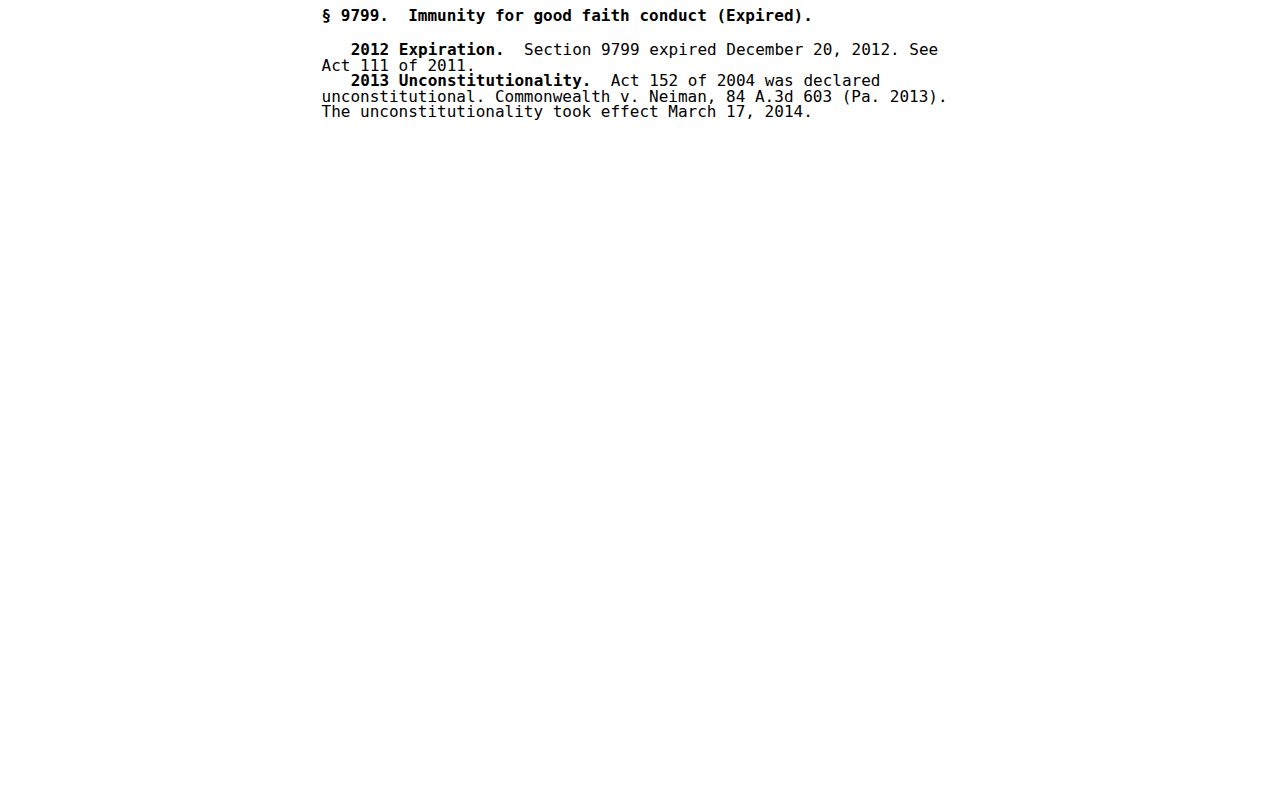
This source separates lawful public awareness from conduct that can cause harm or liability.
The related Pennsylvania Criminal History Record Information Act supplies broader rules for criminal-history information.
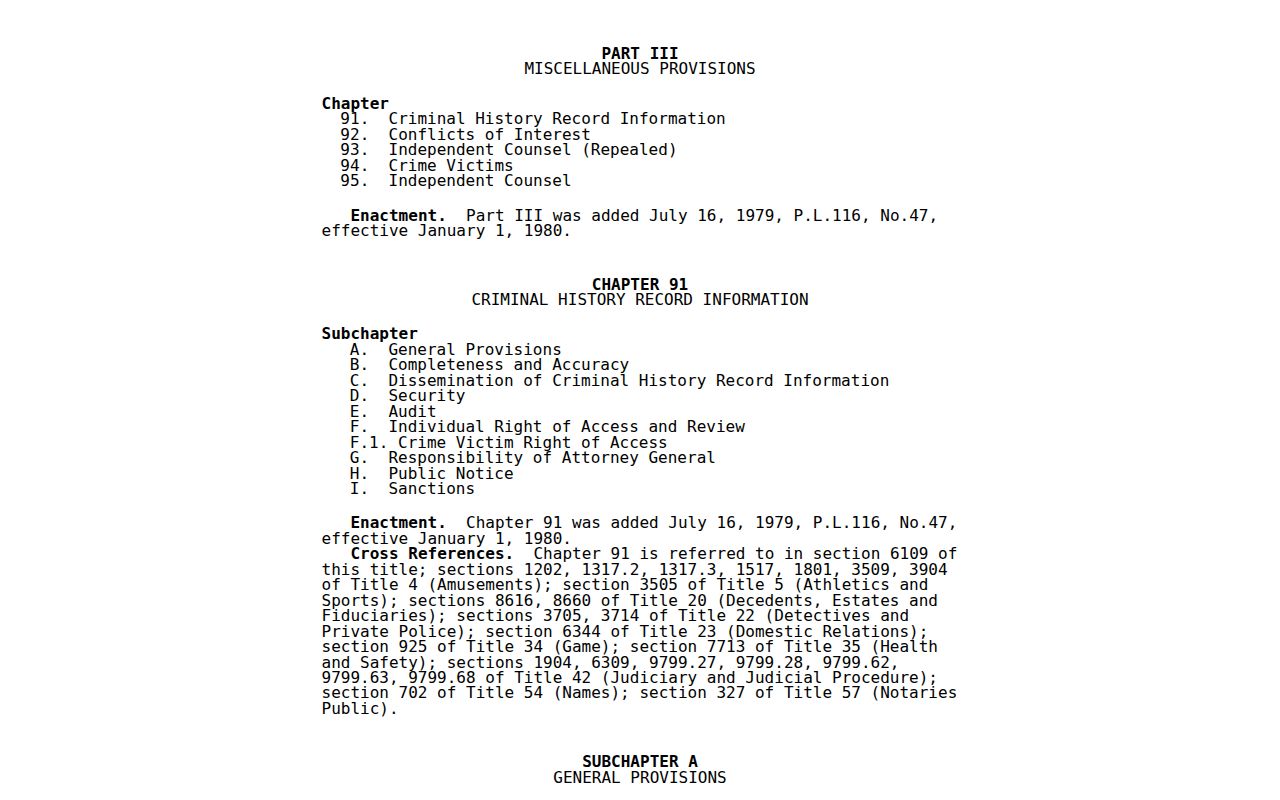
Together, the official sources show why registry information must be checked and used within its defined public-safety purpose.